Olympus Mons
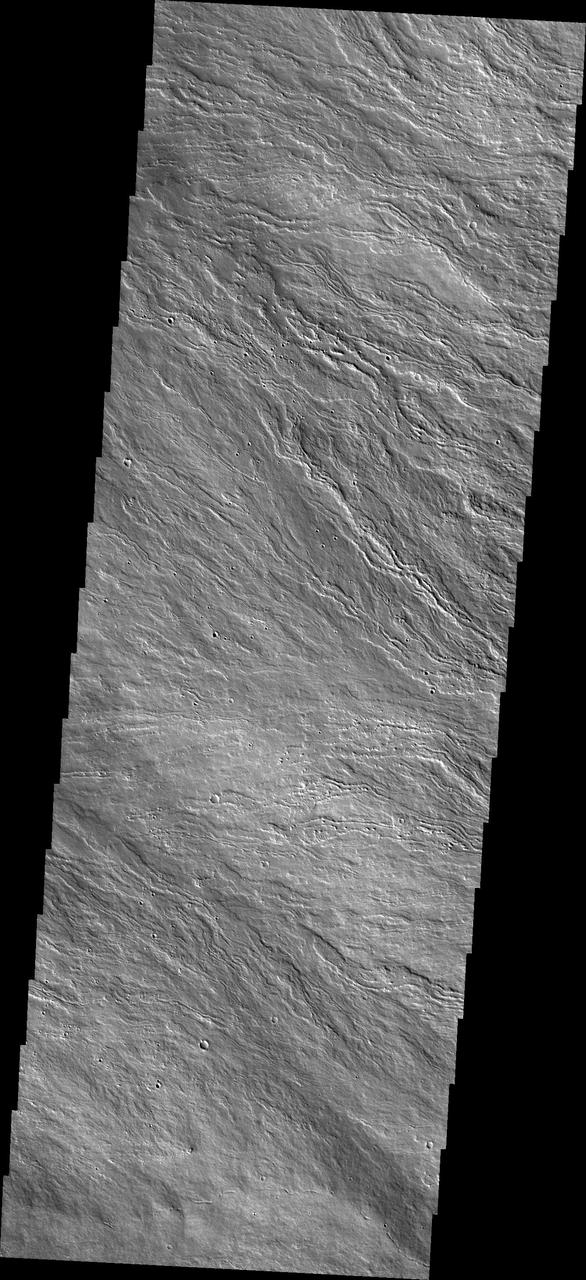
A shield volcano 21.9 km high — roughly two and a half Everests stacked — and about 600 km across at
the base. If you stood at its summit you could not see its edges: they curve over the horizon. Its
slopes average only about 5°; you could walk up it, if you had a few weeks and a spacesuit. It grew so
large because Mars has no plate tectonics — the crust never slid off the hotspot, so the volcano just
kept stacking lava in one place for a billion years or more.
Valles Marineris
A canyon system roughly 4,000 km long, up to 200 km wide, and as much as 7 km deep — the Grand Canyon
would fit inside one of its side channels. It is probably not a river canyon at all but a tectonic
crack: a place where the crust pulled apart as the neighboring Tharsis volcanic bulge loaded the
planet's shell, later widened by landslides, ice, and outflow floods.
The two-faced planet
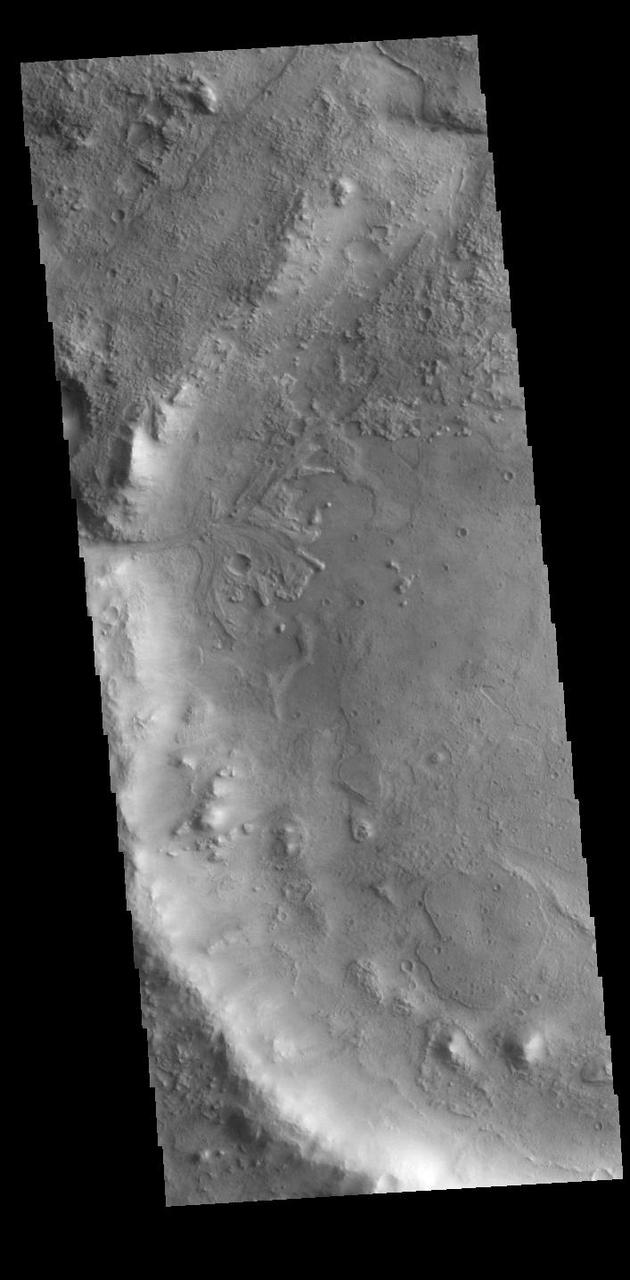
Mars's deepest mystery is visible from orbit: the southern hemisphere is old, high, and battered with
craters; the northern third of the planet is young, low, and smooth — as if something planed it flat.
The leading explanations are a giant impact early in Mars's history or ancient internal overturn.
Either way, the northern lowlands are exactly where an early ocean would have pooled.