An interactive atlas of the observable universe
Deep Fieldyou are here.
Every photograph on this page was taken by a real spacecraft or telescope and is free to use — NASA imagery is in the public domain. Below: a living model of the solar system, a ladder of cosmic distances, and the open archives where all of it lives.
00 · Live right now
Public feeds · no account · no tracking
Position updates every 5 s · Where the ISS at? API
Measured upstream of Earth by NOAA satellites · Space Weather Prediction Center
Kp 5+ means a geomagnetic storm — and aurora pushed toward lower latitudes · NOAA SWPC
Queried from the official catalog on that date · live count at the NASA Exoplanet Archive
02 · The ladder
From orbit to the edge of everything
Each step below is a real photograph, taken further from home than the last. The left column is how long that photograph's light spent traveling before a camera caught it.
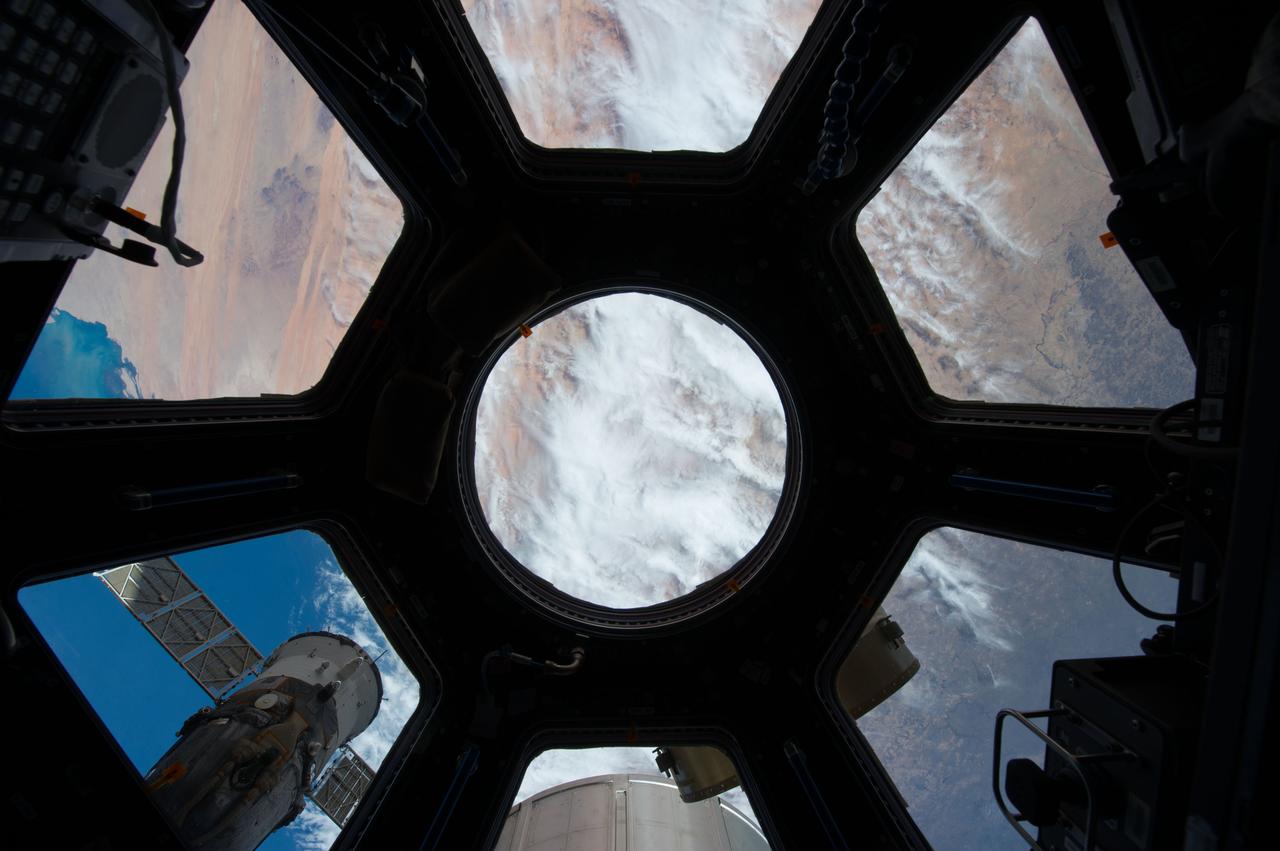
Low Earth orbit — 400 km up
The view from the International Space Station's window. Astronauts here circle the planet sixteen times a day.
The Moon — Earthrise, 1968
Apollo 8's crew were the first humans to see Earth rise over another world. This frame changed how a species saw itself.

Saturn, looking back at us
Cassini's farewell view. In wide-angle frames like this, Earth appears as a single pale pixel below the rings.

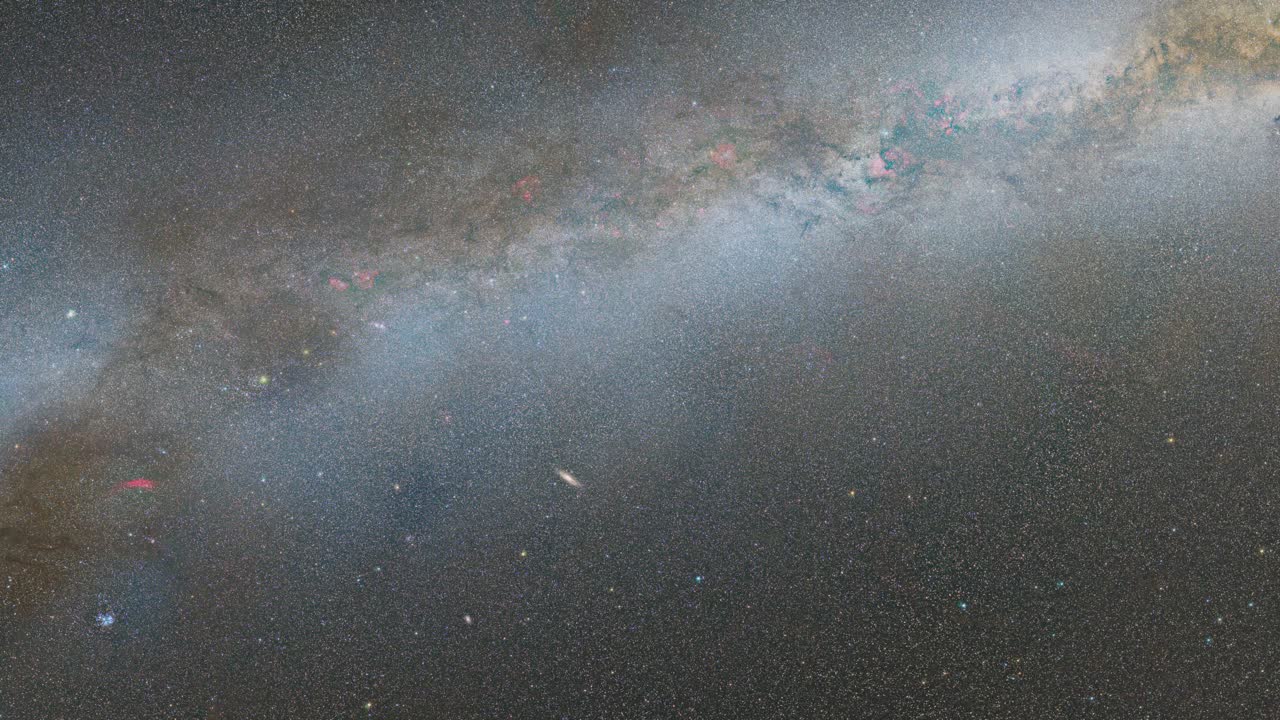
Downtown Milky Way
Spitzer's infrared eye pierces the dust to reveal the crowded core of our own galaxy — hundreds of thousands of stars in one field.

Andromeda — the next galaxy over
Hubble's panorama resolves over 100 million individual stars in a galaxy on course to merge with ours in about four billion years.
Webb's first deep field
Galaxy cluster SMACS 0723, whose gravity bends and magnifies the light of galaxies behind it — some shining from the universe's first billion years. This slice of sky is roughly the size of a grain of sand held at arm's length.

00 · The atlas
Choose your path
Eighteen rooms — plus twelve annexes for the agencies and companies. Start anywhere; everything cross-links.